
LEAVING A MARK

FROM UN-[TITLED]: PART 1, AT INSCAPE
SCENE 3
LEAVING A MARK
(MARCO + 20 AUDIENCE members)
DRAMATURGICAL NOTE: This scene is meant to be bilingual and works best when that is integrated in an easy, casual manner. This version was written for an English/Spanish speaker, but it could be done in any two languages, and the balance/ratio between the two languages can be adjusted to suit the actor and the audiences.
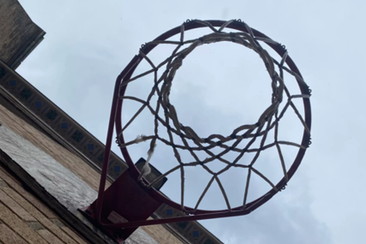
AUDIENCE is delivered onto patio by AKOIYA. MARCO is already on EAST PATIO and is waiting there, shooting hoops as the audience is led in.
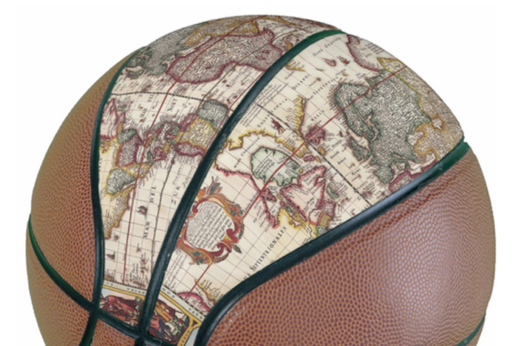
MARCO (Shooting hoops, then greeting AUDIENCE): What’s up? Come on out. Anyone want to give it a go? (Looks around for any volunteers and passes the ball. Does this for a few people, ad-libbing commentary in between. If anyone seems shy or declines, MARCO honors that and doesn’t press it.) Nice! Oh, you’re good. Here, try it again (etc., ad-libbing affirmations.). (Pauses, holding ball): Any Seattleites? (Asking other AUDIENCE members, not from Seattle) Where are you from? What about you? This court has seen a lot of folx from all over. (Ad-libbing again) Where are you from? What about you? (“Oh, where in Florida?” etc.). Sign me up for anywhere near the equator (etc.). Give it a go? (Holding ball again, Pausing) I am from the Dominican Republic, well Bonao Monseñor Nouel, aka El Valle de las Hortencias, or the Valley of Hydrangeas. Which is funny because I never saw any hydrangeas growing up. We then moved to New Jersey. I moved to Philadelphia and soon after, Seattle. Here (passes the ball, a couple shots, then pause again). Many of the folx held here by INS used this court to exercise. For instance: (Now using the ball as a globe/map and tracing the routes) as early as the 1860’s, migrant workers from China arrived here after a long journey across the Pacific. Madres vinieron a trabajar y ahorrar dinero para poder traer a sus hijos. In the 70s, Vietnamese refugees arrived and made their homes within the International District. In the 80s, Asylum seekers came from (pointing out each on the basketball globe): Guatemala, El Salvador, y Nicaragua. (Shoot last hoop, and catch ball, turn back to AUDIENCE) And so many more. Japanese American leaders taken by the FBI during World War II, Khmer people of Cambodia escaping Pol Pot, Arab, Muslim, and South Asian people who were held here after 911.
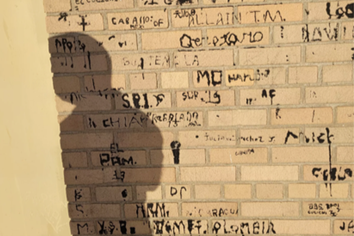
MARCO: (Leading AUDIENCE over to the wall): Now, I want to show you something. Many of the folx that were held here would write their names and the names of their homes all over the walls. (Again, ad-libbing associations) Go ahead. Take a look. Get close. (Pauses for them to examine) And they would write their names and the names of their homes to mark their passage, to commemorate their time, and to curate their own monument (pause again as AUDIENCE continues to look, then a change in tone from friendly and familiar to careful and reverent, now through the end of the scene) Now, if you care to join me, and if you feel comfortable, we can lower our gaze or close our eyes. And imagine… Where is home? Is it on a map? ¿Quizas es una idea? Is it something you carry with you, or is it something you’ve put down somewhere? Is it in a friend or a lover? ¿Quizas fue en el pasado, en el presente, o quizas en un future? Is it humid or dry? Is it in the rain or the sound of the train? ¿En el agua, en el oceano, o en la tierra y los arboles? Is it in the taste of morir soñando or a cold Presidente beer on a hot summer day? Maybe it’s that sweet potato pie recipe that only your auntie knows how to make. You know the one… Is it in the dim sum or the ackee and salted fish? The maduras? Tostones? Is it in a friend? In your community? Is it something you move through, like a ball through a hoop? If you had to put in one word, what would the word be? (Long pause) We can raise our gaze or open our eyes.
MARCO with AKOIYA’s help has unzipped the top of jumpsuit, to reveal canvas with writing underneath.
MARCO: My word is (fill in the blank, “grandmother”, “Shore Drive”, a rooftop in Hong Kong in 2010” etc. and give a little context, then.) Lucia Sunilda, my mother’s name. If you feel called to and want to share your word with me, I offer my shirt as a surface where you can write it, and I’ll care for it.
MARCO and AKOIYA offer AUDIENCE members sharpies and allows them to write on the canvas of the underlayer or a long undershirt. This takes some time, a couple of minutes.
MARCO (When scene has organically wound down or time is up): Thank you.
Later, the canvas or shirts with the names will appear on a clothesline or folded in the corner of a room, at WaNaWari, somewhere carefully and thoughtfully in view and well cared for. The AUDIENCE will see the accumulation of these as one of the final images of the performance. Underneath this installation, they will also be invited to place the rocks they’ve carried from the ASSAY scene in a final ceremonial moment of marking passage and creating a community cairn.
FURTHER NOTES ON SCENE: Folx Needing Seats: Have a few folding seats in each of the playing areas in case someone needs to sit a spell. Rain Plan: If it is raining take folx to the end of the hallway and start there with just ball passing… then to the window to look out the around the corner for the scene, back again for “I want to show you something” to point out the writing on the wall… then, around the corner hall for the more intimate conversation about home. You may begin with an alternate comment on the weather: “Days like this are tough, often are here… you finally get a chance to get outside, and mostly the rain doesn’t stop you, but on a day like today it does…”
END OF SCENE
![_0147++UN-[TITLED]+Matinee+03+26+2023+by+Berette+Macaulay+.jpeg](https://images.squarespace-cdn.com/content/v1/59f2dc21bce17661f701a070/1731259251678-2LSTCE2XBOTDZ8338VW3/_0147%2B%2BUN-%5BTITLED%5D%2BMatinee%2B03%2B26%2B2023%2Bby%2BBerette%2BMacaulay%2B.jpeg)
![+UN-[TITLED]+Closing+Night+03+26+2023+by+Berette+Macaulay+109.jpeg](https://images.squarespace-cdn.com/content/v1/59f2dc21bce17661f701a070/1731259256856-4WQ1W9UT9KQWTELA4TVT/%2BUN-%5BTITLED%5D%2BClosing%2BNight%2B03%2B26%2B2023%2Bby%2BBerette%2BMacaulay%2B109.jpeg)
![_0191++UN-[TITLED]+Matinee+03+26+2023+by+Berette+Macaulay+.jpeg](https://images.squarespace-cdn.com/content/v1/59f2dc21bce17661f701a070/1731259252328-4RZ15PD94JOOX1Q0C77I/_0191%2B%2BUN-%5BTITLED%5D%2BMatinee%2B03%2B26%2B2023%2Bby%2BBerette%2BMacaulay%2B.jpeg)
![_0211++UN-[TITLED]+Matinee+03+26+2023+by+Berette+Macaulay+.jpeg](https://images.squarespace-cdn.com/content/v1/59f2dc21bce17661f701a070/1731259253494-P667MRR1WBSSYE1KMZ6T/_0211%2B%2BUN-%5BTITLED%5D%2BMatinee%2B03%2B26%2B2023%2Bby%2BBerette%2BMacaulay%2B.jpeg)

“LEAVING A MARK” © 2023, Tom Pearson; from UN-[TITLED], with personal and Spanish language contributions from marco farroni leonardo.